


Is PRP Hair Treatment Safe for Hair Loss?
- BILAL RAJA
- Mar 9
- 5 min read
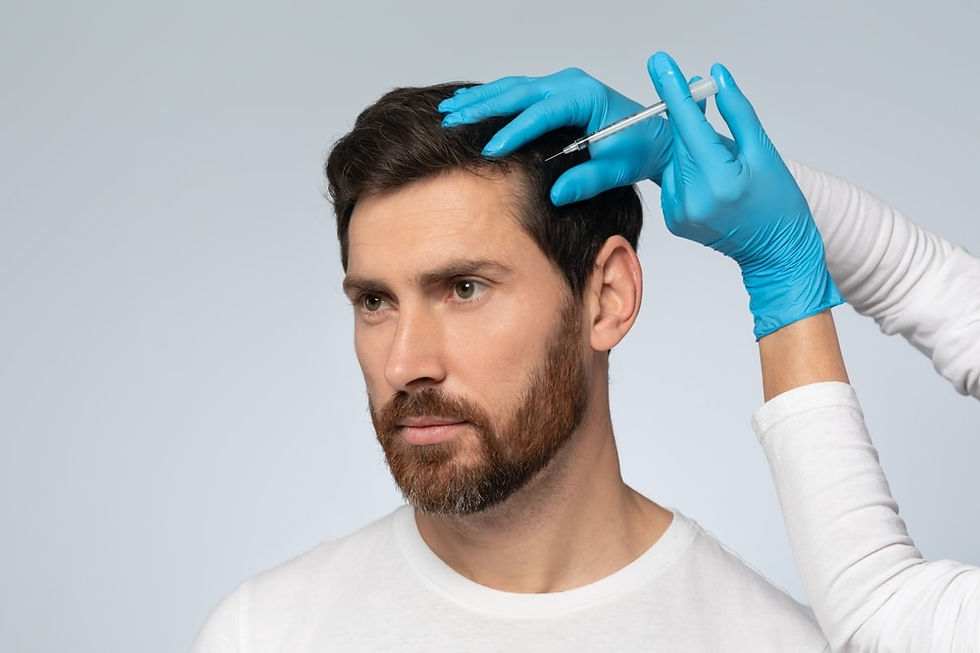
The quest for a fuller head of hair often leads to innovative medical solutions that bridge the gap between nature and science. Among these, Platelet-Rich Plasma (PRP) therapy has emerged as a frontrunner for those seeking non-surgical intervention. PRP Hair Treatment in Abu Dhabi is a sophisticated procedure that utilizes the healing properties of your own blood to stimulate dormant follicles and enhance hair density. By focusing on the body’s innate ability to repair itself, this treatment provides a targeted approach to thinning hair, making it a popular choice for individuals looking to restore their confidence without invasive surgery.
Understanding Platelet-Rich Plasma Therapy
The Science of Regeneration
PRP therapy is rooted in the principles of regenerative medicine. Our blood consists of various components, including red blood cells, white blood cells, and platelets. Platelets are primarily known for their role in clotting, but they also contain a high concentration of growth factors. These proteins are essential for tissue repair and cellular growth. When concentrated and applied to the scalp, they act as a "fertilizer" for the hair follicles, providing the necessary nutrients to transition hair from a resting phase back into an active growth phase.
How Growth Factors Stimulate Hair
The growth factors found in platelets, such as Vascular Endothelial Growth Factor (VEGF) and Platelet-Derived Growth Factor (PDGF), work by increasing blood flow to the hair follicles. This enhanced microcirculation ensures that the follicles receive more oxygen and nutrients. Additionally, these factors prolong the "Anagen" (growth) phase of the hair cycle, which results in thicker hair shafts and a reduction in premature shedding.
Regenerative Power: Uses autologous (your own) blood to trigger healing.
Cellular Activation: Stimulates stem cells within the hair bulb.
Nutrient Delivery: Improves the environment of the scalp for sustained growth.
The Step-by-Step Procedure
Initial Preparation and Collection
The journey begins with a simple blood draw, much like a routine medical test. A small amount of blood is taken from the arm and placed into a specialized device called a centrifuge. This machine spins the blood at high speeds to separate its components based on density. The goal is to isolate the plasma that is highly concentrated with platelets while removing red and white blood cells that are not needed for this specific application.
Processing and Concentration
Once the centrifugation is complete, the resulting "liquid gold" or Platelet-Rich Plasma is prepared for administration. The concentration of platelets in this serum can be several times higher than what is typically found in the bloodstream. This concentrated serum is then carefully drawn into syringes, ready to be delivered to the areas of the scalp experiencing thinning or reduced density.
Precise Scalp Administration
The final stage involves the meticulous administration of the PRP into the dermal layer of the scalp. Using very fine needles, a specialist performs a series of injections across the target areas. To ensure a comfortable experience, a topical cooling agent or numbing cream may be applied beforehand. The procedure is relatively quick, often taking less than an hour, and allows individuals to return to their daily routines shortly after.
Extraction: Blood is drawn in a sterile environment.
Centrifugation: High-speed spinning isolates the nutrient-rich plasma.
Injection: Targeted delivery to thinning areas ensures maximum impact.
Identifying the Ideal Candidate
Early Stages of Thinning
PRP therapy is most effective for individuals who are in the early to middle stages of hair loss. It works best on "living" follicles that have become weakened or miniaturized. If a follicle is still producing thin, wispy hair, PRP can often revitalize it. However, it is generally less effective for areas that are completely bald, as the treatment requires a functional follicle to stimulate.
Addressing Various Types of Hair Loss
While most commonly used for Androgenetic Alopecia (pattern baldness), PRP is also beneficial for other conditions. It can assist individuals dealing with stress-induced shedding, known as Telogen Effluvium, or those experiencing thinning due to hormonal changes. Both men and women can benefit from the treatment, provided they have a sufficient supply of active follicles to respond to the growth factors.
General Health Considerations
A successful outcome often depends on the quality of the patient's own blood. Individuals who maintain a healthy lifestyle, stay hydrated, and are free from certain blood-related conditions typically see the best results. Since the procedure uses the patient’s own biological material, it is an excellent option for those seeking a natural alternative to synthetic medications or chemical-based topical treatments.
Thinning Hair: Ideal for those noticing a wider part or receding hairline.
Post-Transplant: Often used to support the growth of newly transplanted grafts.
Overall Wellness: Healthier blood leads to a more potent PRP serum.
What to Expect Post-Treatment
Immediate Recovery
One of the primary advantages of this therapy is the lack of significant downtime. Most people experience very little interruption to their schedule. There might be some mild tenderness or a feeling of "fullness" in the scalp immediately following the injections, but these sensations typically resolve within a few hours. Specialized clinics, such as the Enfied Royal Clinic Abu Dhabi, emphasize gentle post-care to ensure the scalp remains comfortable.
The Timeline for Visible Change
Patience is key when it comes to hair restoration. Hair grows slowly, and the regenerative effects of PRP take time to manifest. Most individuals begin to notice a reduction in hair shedding within the first few weeks. Visible improvements in thickness and density usually become apparent after three to six months. A standard protocol often involves an initial series of sessions, followed by maintenance visits to sustain the results.
Long-Term Hair Maintenance
PRP is not a one-time "cure" but rather a management strategy for hair health. To keep the follicles stimulated and the hair looking its best, periodic maintenance sessions are recommended. These follow-up treatments help counteract the ongoing natural or genetic factors that contribute to hair thinning, ensuring that the progress made during the initial phase is preserved over the long term.
No Downtime: Return to work or social activities almost immediately.
Gradual Improvement: Results appear naturally over several months.
Sustainability: Periodic sessions help maintain hair density.
Comparison with Other Hair Solutions
Non-Surgical vs. Surgical
Unlike hair transplant surgery, which involves moving hair follicles from one area to another, PRP focuses on improving the health of the existing hair. It is a non-invasive alternative for those who may not be ready for surgery or who wish to avoid the recovery time associated with transplants. In many cases, it is used as a complementary therapy to enhance the success rate of surgical procedures.
Synergy with Topical Treatments
Many people find that PRP works exceptionally well when combined with other hair loss management strategies. By improving the health of the scalp and the blood supply to the follicles, PRP can potentially enhance the effectiveness of topical serums or oral supplements. This multi-faceted approach addresses hair loss from several angles, leading to more robust and sustainable outcomes.
Frequently Asked Questions
Is there a specific age limit for the treatment?
There is no strict age limit, but the treatment is most effective for adults experiencing active hair thinning. It is commonly performed on individuals ranging from their early 20s to late 60s. The key factor is the presence of viable hair follicles rather than the chronological age of the patient.
How many sessions are usually required?
While every individual is different, a common approach involves an initial phase of three to four sessions spaced about a month apart. After this "loading" phase, maintenance sessions are typically scheduled every six to twelve months to ensure the follicles remain active and healthy.
Can I wash my hair after the procedure?
It is generally recommended to wait at least 24 hours before washing your hair. This allows the scalp to settle and ensures that the injection sites have closed completely. When you do wash your hair, it is best to use a gentle, pH-balanced shampoo and avoid vigorous scrubbing for the first couple of days.
Is the treatment suitable for women?
Yes, PRP is highly effective for women, particularly those experiencing female pattern thinning or thinning due to hormonal changes. Since it is a non-hormonal and natural treatment, it is a preferred choice for many women who want to avoid the side effects sometimes associated with other hair loss medications.


Comments